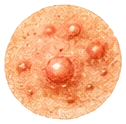
Blackheads and whiteheads
- Blackhead · open comedone
- An opening in the follicle contains a dark plug. The dark tip comes from material in the plug, including pigment. Scrubbing it as if it were dirt can irritate the skin.
- Whitehead · closed comedone
- A small skin-coloured or pale bump forms where a plug sits beneath the surface. A whitehead and a pus-filled spot have different structures.
Sources [1]
A raised bump or a pus-filled tip
- Papule
- A small, inflamed, raised bump. You might notice tenderness or feel the change more easily than you see redness.
- Pustule
- An inflamed spot with visible pus near its surface. A clinician looks at the full pattern of spots to understand what is happening.
Sources [1]
A deeper, painful lump
A nodule sits deeper in the skin and can feel firm and sore. People often use “cystic acne” to describe deeper breakouts. These can leave lasting scars. Ask for an assessment if deep spots recur or hurt, even if there are only a few.
When the bump has settled
Run a fingertip gently over the area once. If the surface feels level and the colour has changed, explore the marks guide. A lasting dent or raised area belongs in the texture guide. The same patch can show both.
Sources [3]
Sources for this guide
CureAcne editorial team · Sources checked 21 Nov 2026 · Independent clinical review pending. Suggest a correction.